


A Gentle Reset for the Nervous System
Restorative Yoga at Bloom in Souderton
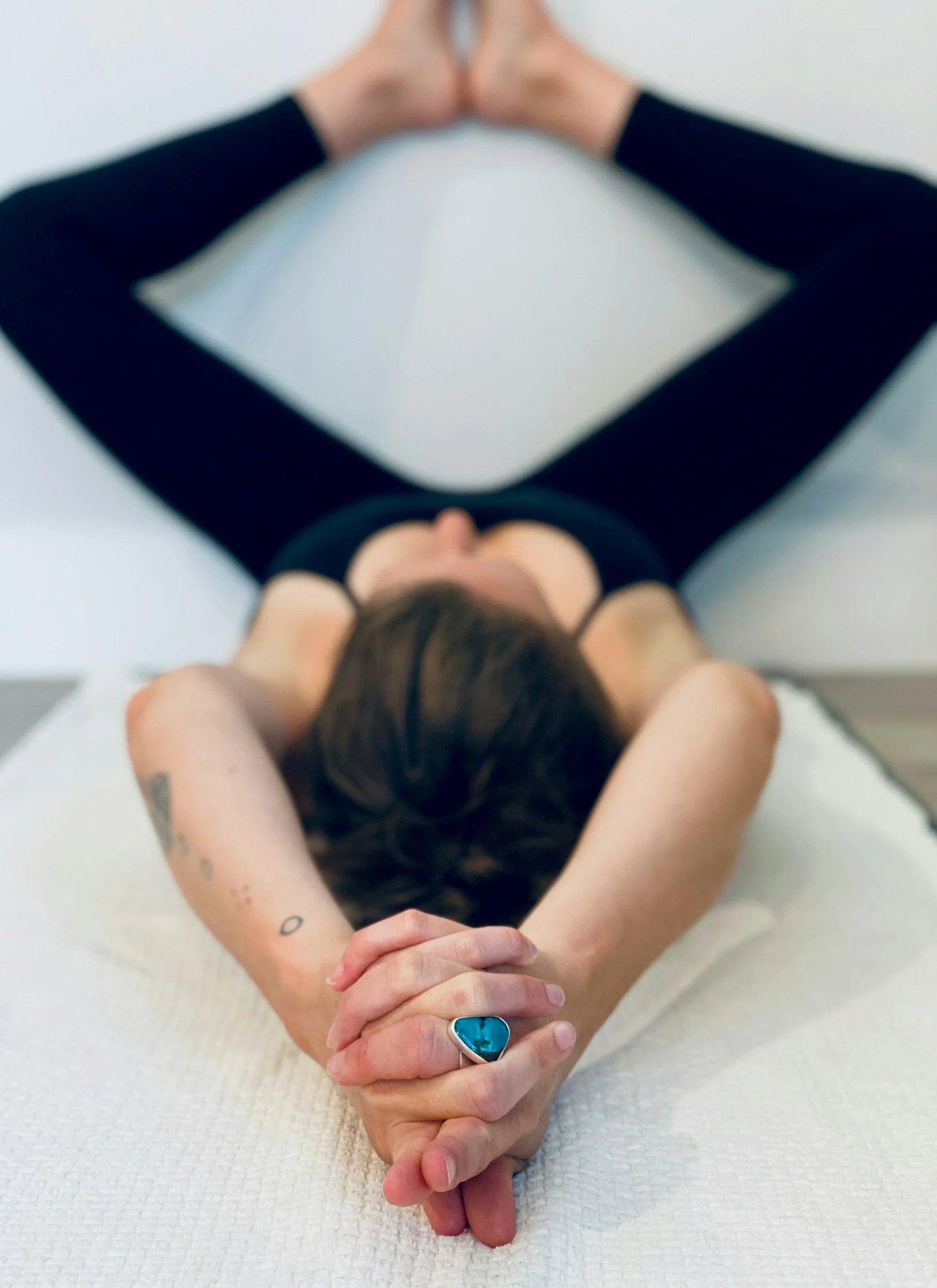
Restorative yoga at Bloom is a slow, grounding practice designed to help the body settle and the nervous system reset. This is a floor-based experience that uses props like bolsters and blankets to fully support the body, allowing you to rest without effort or strain. Poses are held for longer periods, creating space for tension to ease and for the body to naturally downshift.
This practice is especially helpful for people who feel overstimulated, worn down, or disconnected from their body. Restorative yoga is not about achievement or performance. It is about creating the conditions for rest, comfort, and reconnection in a calm, supportive environment.
No prior yoga experience is needed. Each class is guided at an unhurried pace, with clear instruction and room to make the practice your own. The focus is on slowing down, feeling supported, and allowing your body to take what it needs from the experience.

Supporting Rest and Regulation
Patterns that emerge when rest is consistently missed
When rest is limited or postponed for long periods of time, the body often adapts in quiet, cumulative ways. These patterns are not signs of failure or weakness, but natural responses to ongoing demands, stress, or overstimulation. Restorative yoga offers a gentle way to notice these patterns and create space for the body to slow down and recover.

Living in a constant state of tension
When the body remains braced for long periods of time, tension can become the default. Muscles stay tight, breathing becomes shallow, and it can feel difficult to fully relax even in moments of rest. This state often develops gradually and can be easy to overlook until the body begins to feel exhausted or strained.

Feeling overstimulated or burned out
Ongoing mental, emotional, or sensory input can leave the nervous system without enough space to reset. Over time, this can show up as irritability, fatigue, or a sense of being overwhelmed by even small demands. Restorative yoga offers a quieter, slower environment where the body can step out of constant stimulation and begin to settle.

Difficult resting or slowing the mind
For some, stillness does not come easily. The mind may stay active, alert, or restless even when the body is physically tired. This can make traditional rest feel unproductive or uncomfortable. A supported, structured practice can help create conditions where slowing down feels safer and more accessible.

You want to feel more grounded in your body
Periods of stress or overwhelm can lead to a sense of disconnection from physical sensations. Awareness of the body may fade, or it may feel difficult to recognize what the body needs. Gentle, supported practices can help rebuild a sense of presence and comfort within the body over time.
Yoga: A Practice Designed for Restoration
How Restorative Yoga Can Support Change
A calmer baseline
Restorative yoga creates conditions for the nervous system to settle, not just during class but beyond it. Over time, many people notice a greater sense of steadiness and ease in their day-to-day life, even when stressors are still present.
Greater awareness of the body
Through stillness and support, restorative yoga helps rebuild awareness of physical sensations in a gentle way. This can make it easier to recognize tension, fatigue, or the need for rest before those signals become overwhelming.
Increased capacity for rest
For those who struggle to slow down, this practice offers a structured and supported way to experience rest without effort. Over time, rest can begin to feel more accessible and less uncomfortable or unfamiliar.
A sense of grounding and presence
Restorative yoga encourages a quieter connection to the present moment. Many people describe feeling more rooted, settled, and connected to themselves after practice, even without needing to analyze or talk through their experience.
Mental Health & Wellness Resources
Explore Articles on Therapy, Wellness, and Everyday Wellbeing




What Our Clients Say
I received support when I needed it most.
Bloom has been a grounding place for me during one of the hardest seasons of my life. I felt supported from the very first session, and over time I’ve learned how to reconnect with myself in ways I didn’t think were possible. The compassion here is real, and it’s made all the difference.